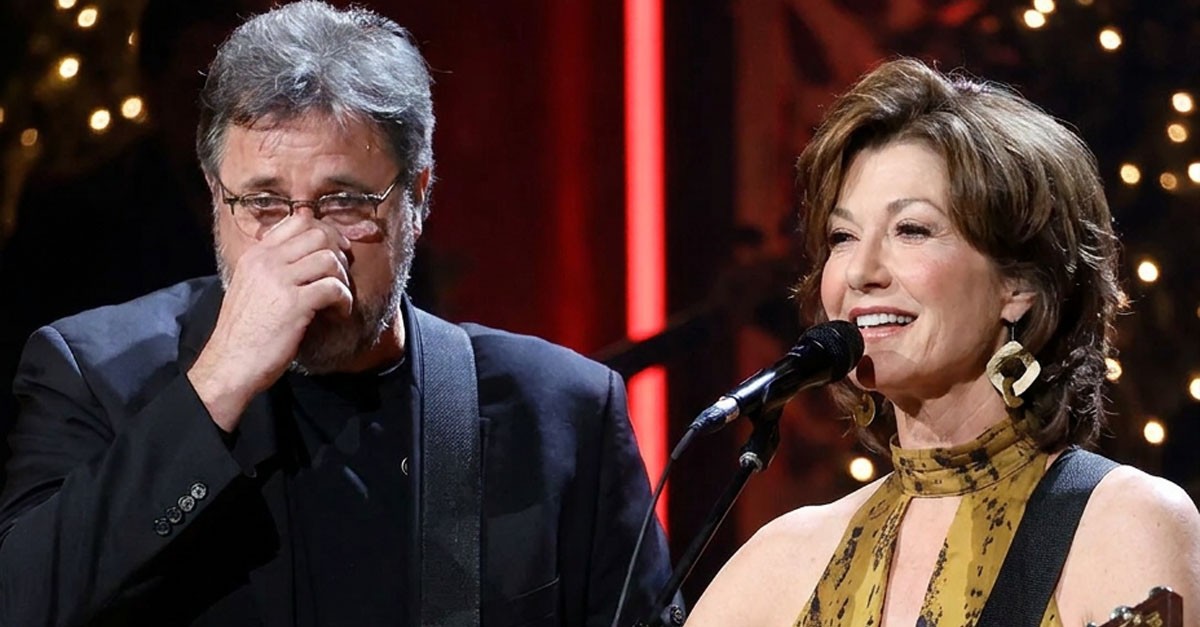
Vince Gill wrote "Go Rest High on That Mountain" in the wake of two significant losses: the untimely death of his friend Keith Whitley and the passing of his brother. The song, characterized by its heartfelt lyrics and haunting melody, has resonated with countless listeners who have experienced grief. Over the years, it has become a staple at memorial services and tributes, embodying a universal message of solace and remembrance.
When Jenny Gill stepped onto the stage, she did so with the weight of her father’s legacy behind her. The Ryman, known for its rich musical history and intimate atmosphere, became a sanctuary for shared emotions. As she began to sing, the audience was enveloped in a silence so profound that it felt as if time had stopped. This was not the polite hush of anticipation; it was a collective breath held in reverence for the moment.
.jpg)
A Father's Perspective
Vince Gill, seated in the third row, was not just a spectator; he was a father witnessing his daughter embody his pain and artistry. In that moment, he transformed from a celebrated musician with twenty Grammys and a storied career into a man grappling with personal loss. His hands rested in his lap, and his jaw was tight, revealing the vulnerability that often accompanies profound grief.
The silence in the auditorium spoke volumes. It conveyed a deep understanding of the emotional weight carried by both father and daughter. For 30 years, Vince had performed in front of thousands, receiving standing ovations and accolades. Yet, in this moment, the applause was replaced by an unshakeable stillness that highlighted the song's significance far beyond its musicality.
A Voice of Her Own
Jenny Gill's interpretation of her father's song was not merely a replication of his artistry; it was a reclamation of the narrative. As she sang, she infused her own experiences and emotions into the performance, transforming it into something uniquely hers. This is where the power of music lies—some songs transcend their original creators and become vessels for others' emotions and experiences.
In her performance, Jenny demonstrated that "Go Rest High on That Mountain" was not just Vince’s story, but also a reflection of her own journey with loss and healing. The moment before the last chorus, when she paused and allowed the audience to absorb the weight of the lyrics, was unexpected and profound. It was as if she invited everyone into the shared space of grief and remembrance, creating a collective experience that resonated deeply with all present.
The Legacy of "Go Rest High on That Mountain"
"Go Rest High on That Mountain" has become more than just a song; it is a cultural touchstone for those navigating the complexities of grief. Its ability to resonate with audiences across generations speaks to the universal nature of loss and the healing power of music. As Jenny Gill sang, it became clear that the song had evolved into a communal anthem, one that belonged to anyone who had ever loved and lost.
The Ryman Auditorium, often referred to as the "Mother Church of Country Music," served as the perfect backdrop for this poignant moment. Its storied walls have witnessed countless performances, but the silence that enveloped the room during Jenny's rendition was a powerful reminder of the emotional connections that music can foster.
The Unspoken Connection
The night at the Ryman will be remembered not just for the performance but for the silence that spoke louder than words. In an age where music often competes for attention, the moment shared between Vince Gill, Jenny Gill, and the audience highlighted the importance of stillness and reflection. It reminded us that some songs transcend their creators, becoming part of a larger narrative of human experience.
As Jenny Gill continues to carve her path in the music industry, the legacy of "Go Rest High on That Mountain" will undoubtedly follow her. It is a song that encapsulates love, loss, and the enduring power of familial bonds an everlasting reminder that in the depths of grief, music can provide solace and healing. The Ryman may have gone quiet that night, but the echoes of that silence will resonate for years to come.